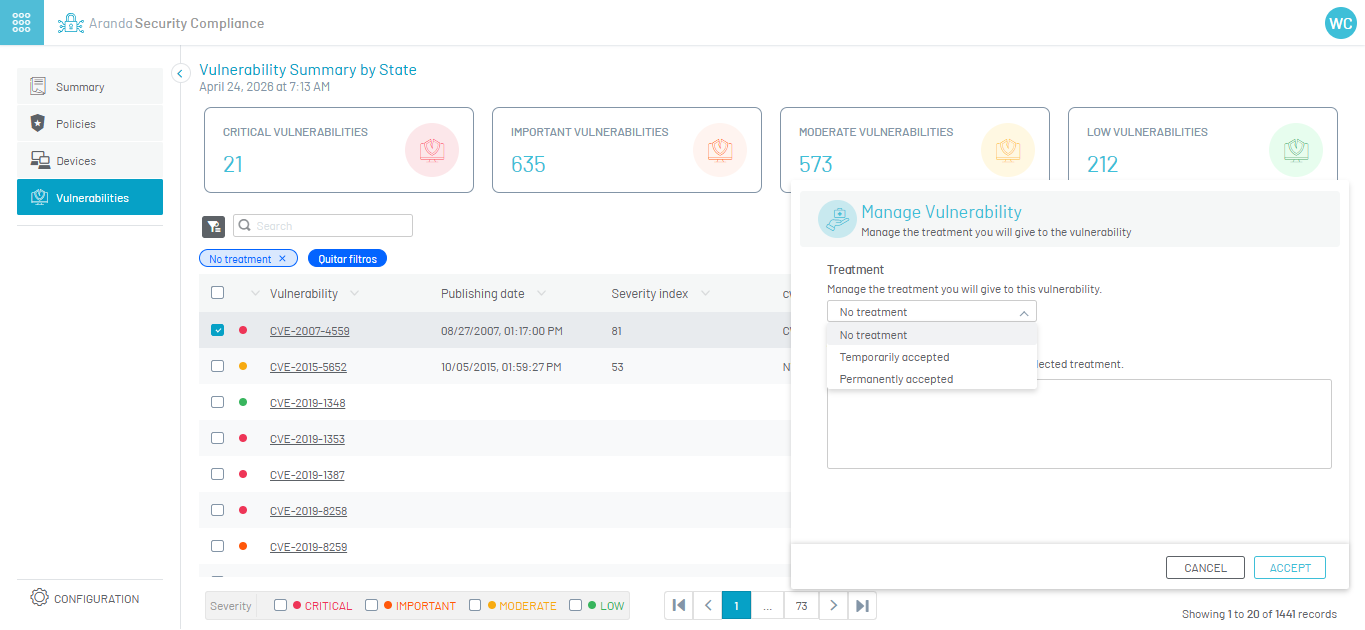
1. Enter the Aranda Security Compliance console, select the option Vulnerabilities from the main menu. In the summary view, you will be able to view the results of the analysis of the list of vulnerabilities classified by severity and grouped by devices
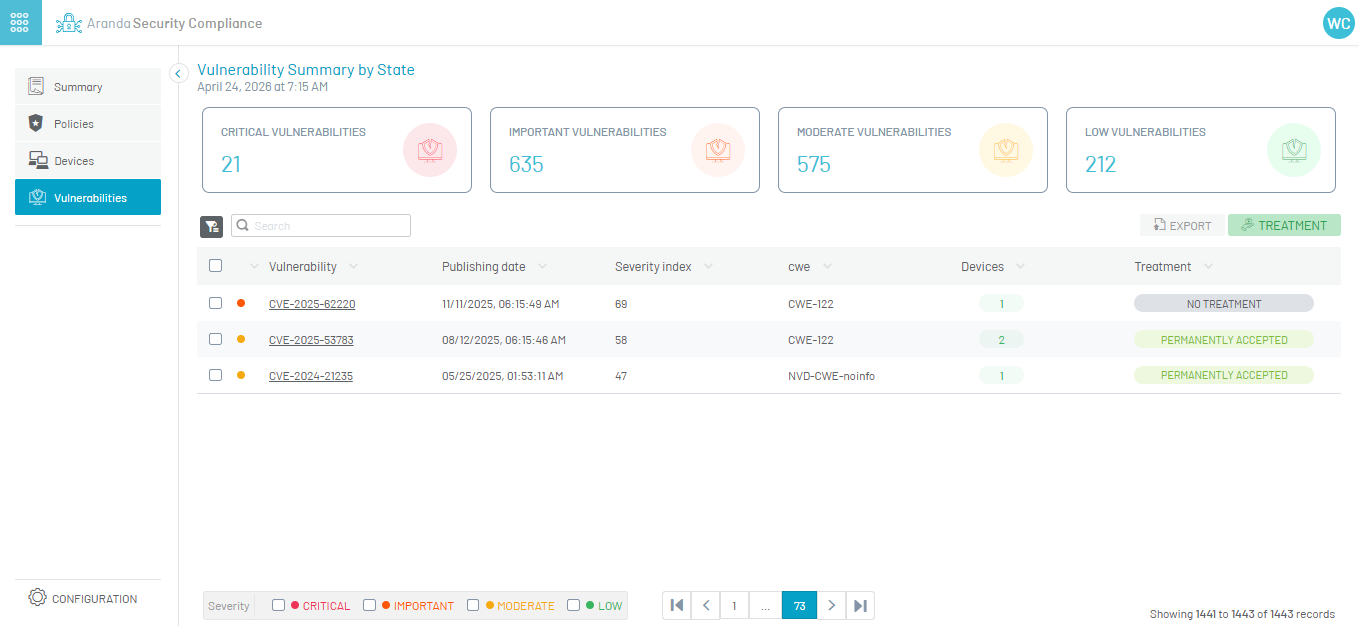
⚐ Note: The report generated from the vulnerability scan performed by the agents is only available for Windows and MacOS operating systems. If you are using a different operating system, you will not be able to access this report.
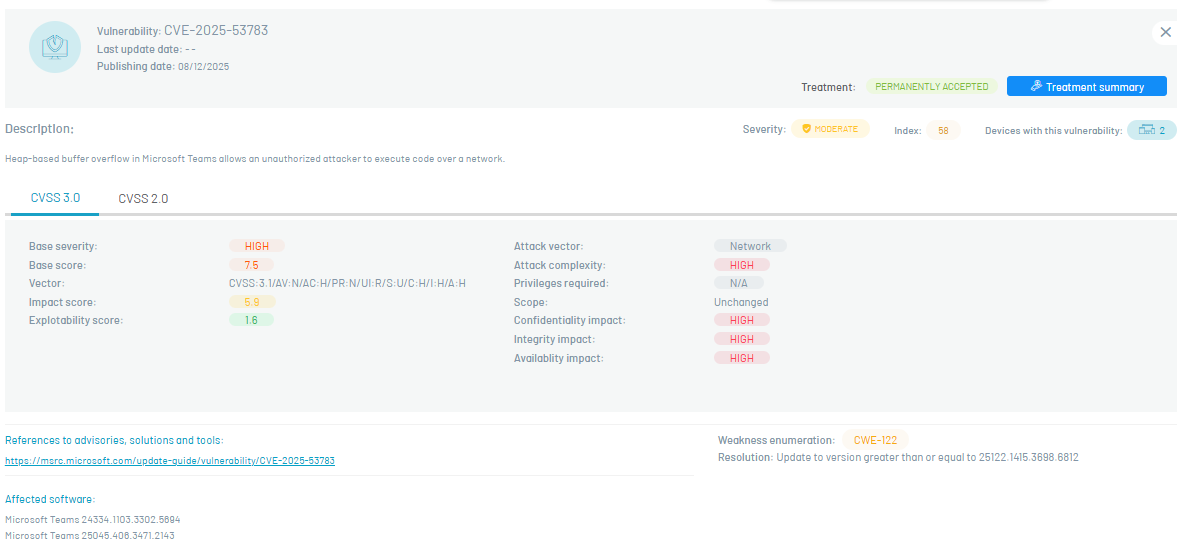
2. In the Vulnerabilities view, when you select the name of a vulnerability, a new view is displayed showing the name, description, date of last update, date of publication, severity, affected software, and the number of devices that register the vulnerability with access to filter the devices.
Export Vulnerabilities
1. In the Vulnerabilities information view, after filtering the respective data and getting the list of vulnerabilities associated with devices, click the Export.
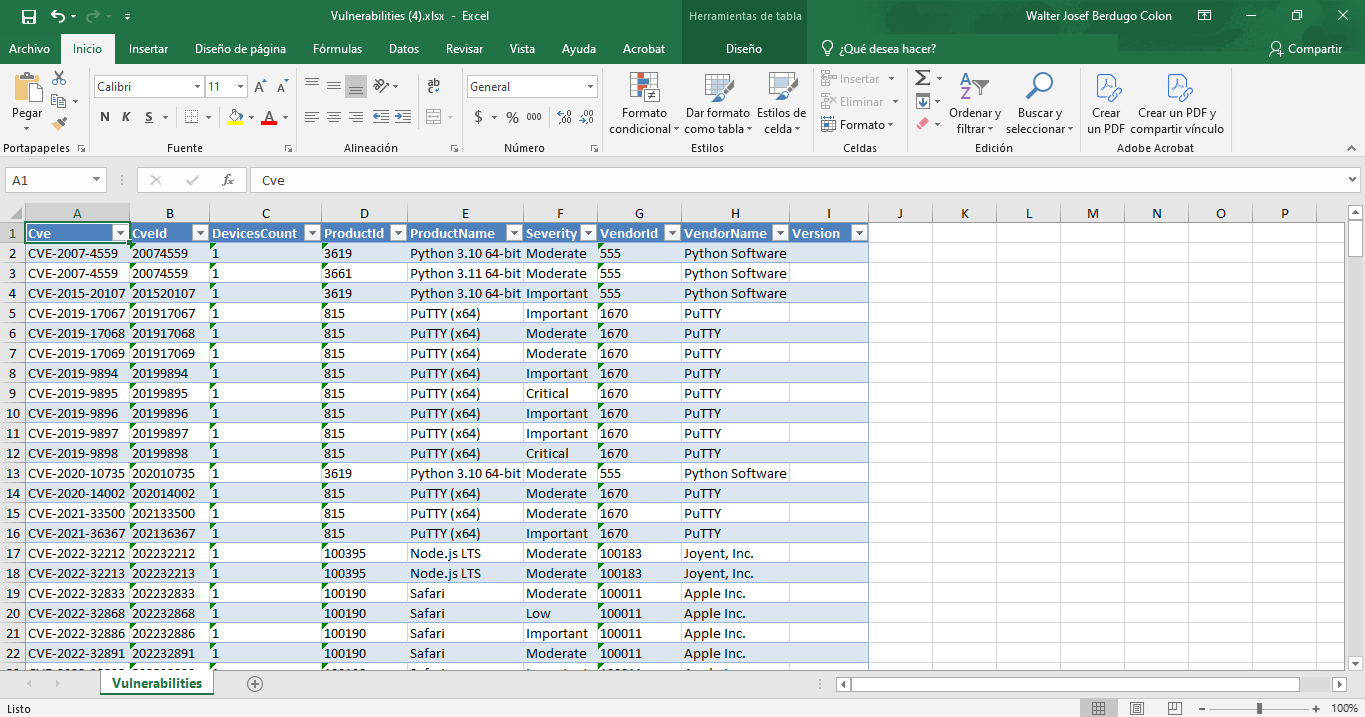
2. In the header menu of the Aranda Security Admin Console, the Downloads where you can view the generated format of the list of vulnerabilities in Excel format.
3. Click on the file to download the vulnerability information. The downloaded file includes all the fields of the vulnerability.
Vulnerability Treatment
1. In the Vulnerabilities information view, after filtering the respective data and obtaining the list of vulnerabilities associated with devices, select the vulnerability to which you want to manage the Treatment.
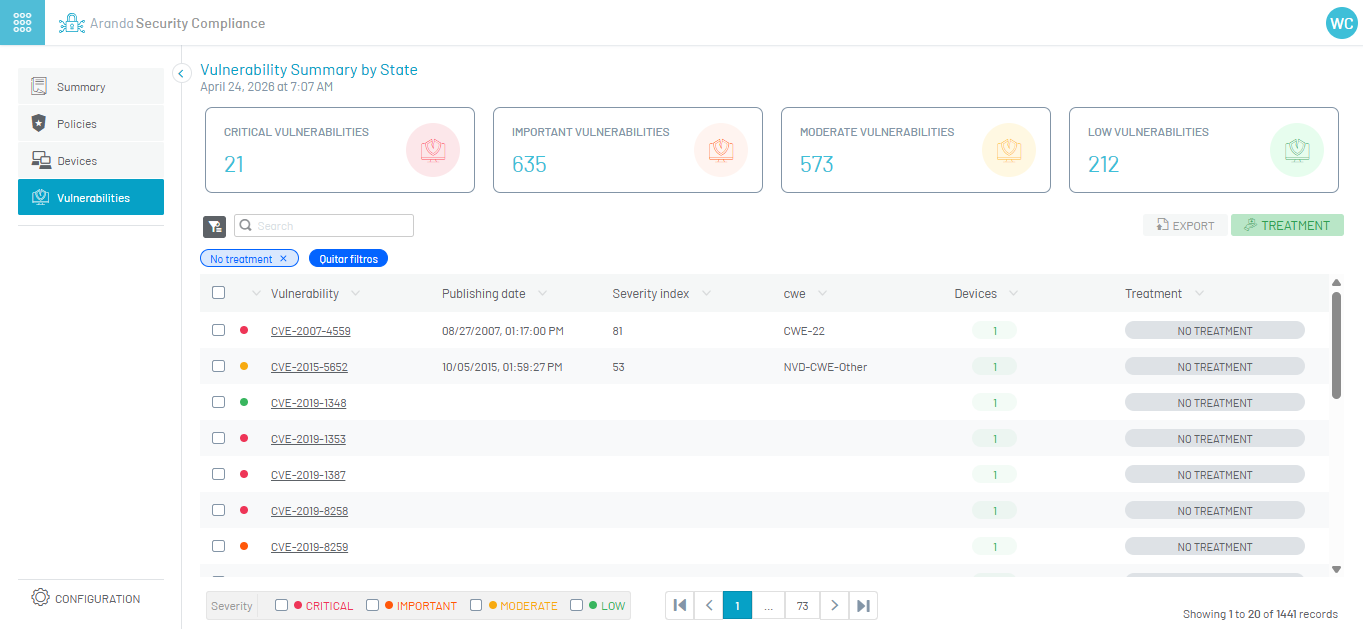
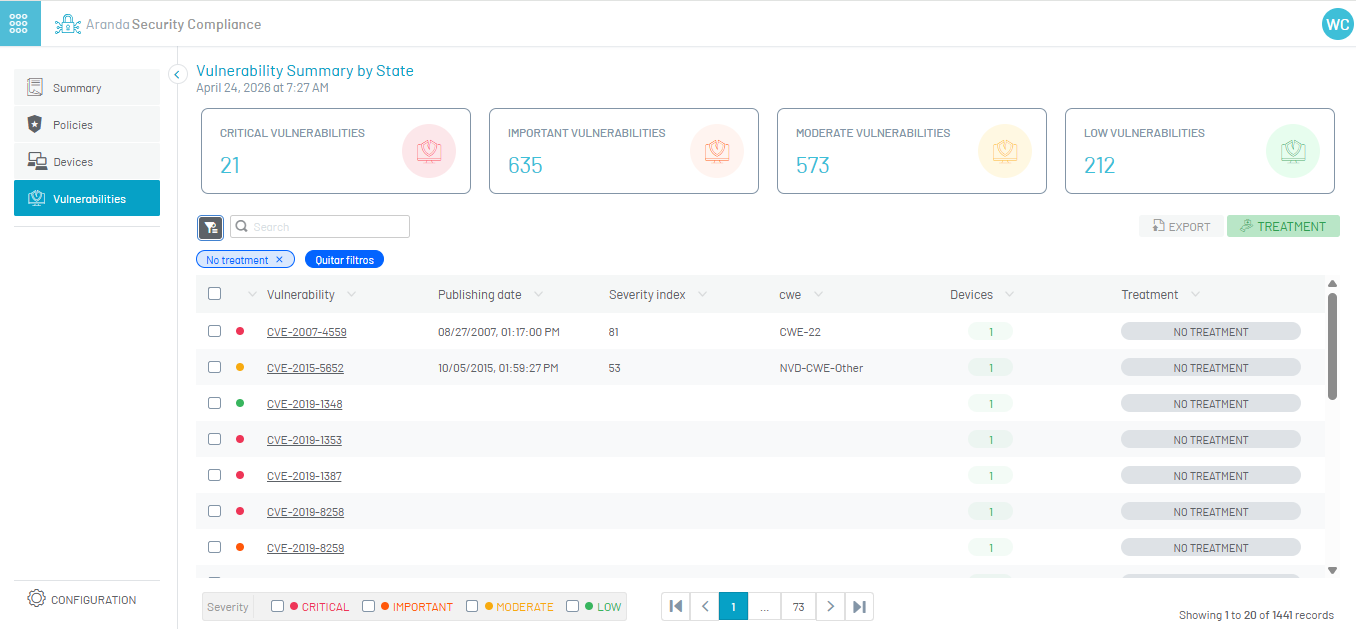
2. Select one or more Vulnerabilities and click the Treatment available in the Aranda Security management console.
3. The panel is enabled Manage Vulnerability, where in the countryside Treatment You will be able to choose one of the options available for the selected vulnerability, and enter a Justification Mandatory for change:
No treatment: Status assigned to vulnerabilities that do not have a recorded acceptance decision.
Temporarily accepted: It allows the acceptance of risk to be recorded on a temporary basis, for a period defined according to the internal management of the organization.
Permanently accepted: Allows the definitive acceptance of the risk associated with the vulnerability to be recorded.