


In the process of managing and administering notification rules in the Aranda Security application, you can view, create, edit, and delete these types of rules.
View Rules
1. Enter the Aranda Security Compliance console with administrator role, select the option Rules from the Settings menu. In the information view, you can view the list of available rules and sort the information grouped by name and date of modification.

Creating Rules
2. To create a rule, log in to the Aranda Security console with the administrator or specialist role, in the Rules from the Settings menu. In the information view, select the New; In the window that is enabled you will be able to enter the basic information of the rule:

Select Event
3. In the Event, the event is selected to determine the rule type. The system has the following three events available:
| Event | Description |
|---|---|
| Change in compliance group level | It is activated when the level of compliance of a group changes. |
| New vulnerability detected | It is triggered when a new vulnerability is identified in the monitored environment. |
| New vulnerability detected on devices | It is activated when a new vulnerability associated with devices is detected. |

Create Conditions
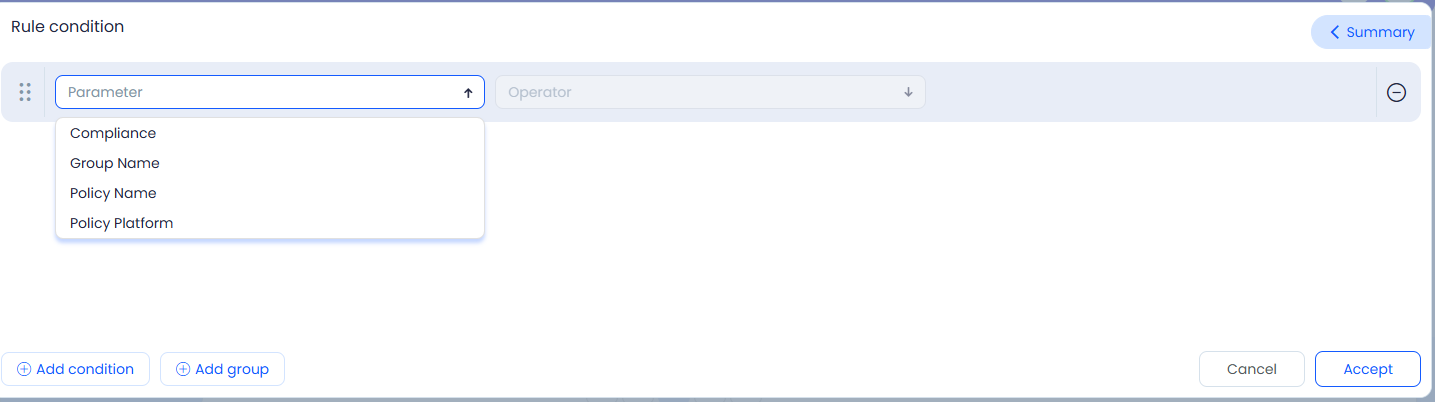
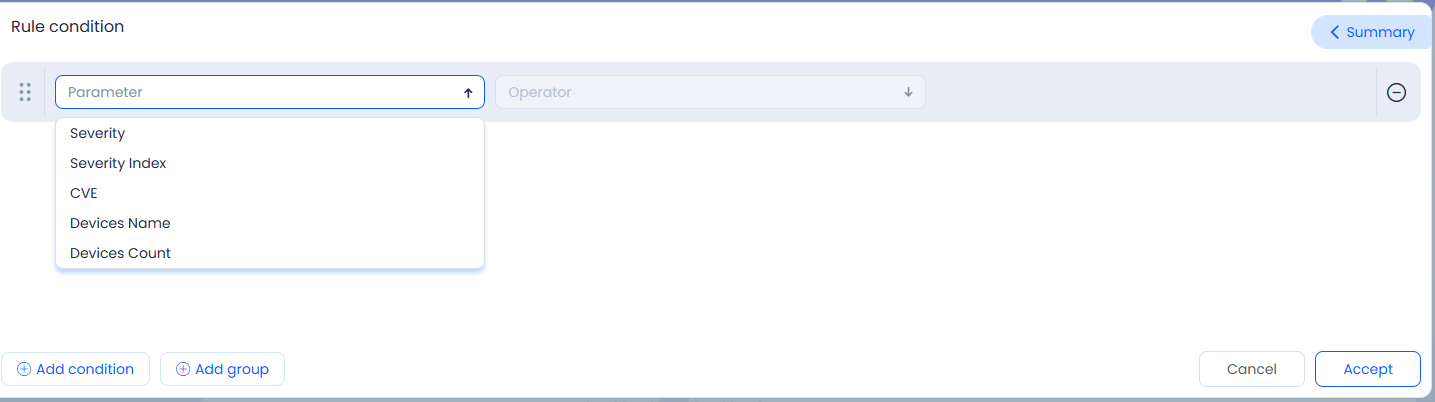
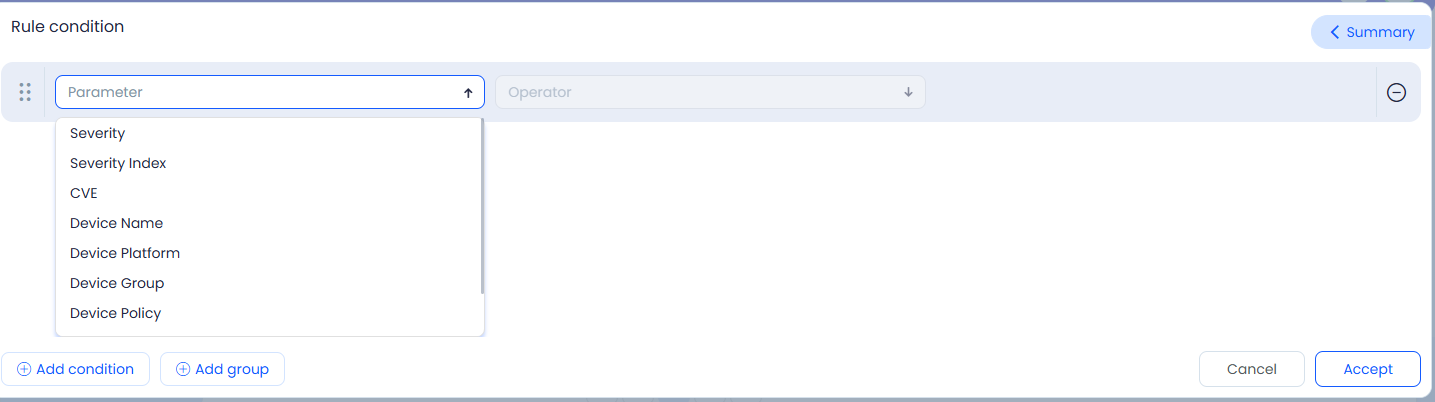
4. In the Create Event, the conditions that must be met for the rule to be activated are parameterized. The system allows you to configure the following conditions:
| Event | Condition |
|---|---|
| Change in compliance group level | Select the group or compliance criteria required to identify the level variation that will trigger the notification. |
| New vulnerability detected | Define the parameters of the vulnerability to be assessed, such as severity, according to the monitoring needs. |
| New vulnerability detected on devices | Configure the device and discovered vulnerability parameters to focus the rule on specific computers in the environment. |
Select Actions
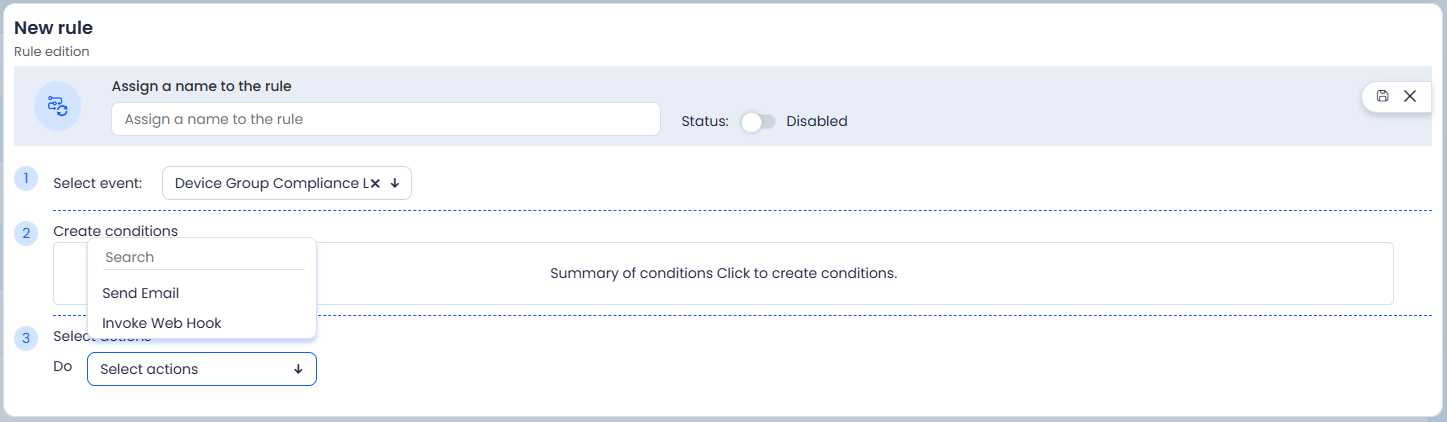
5. In the Select Actions, defines the action that the system will execute when the rule is triggered. The available options depend on the previously selected event:
| Event | Available Actions |
|---|---|
| Change in compliance group level | Send mail and Invoke Webhook. |
| New vulnerability detected | Send mail and Invoke Webhook. |
| New vulnerability detected on devices | Only Invoke Webhook. |
6. Both in Send mail as in Invoke Webhook, the system provides a list of tags that are replaced by the event information at the time the action is executed. The available tags depend on the event configured in the rule:
| Event | Available Tags |
|---|---|
| Change in compliance group level | GroupId, GroupName, Compliance, PolicyId, PolicyName, and PolicyPlatform. |
| New vulnerability detected | CveId, Cve, Severity, Published, Cwe, Description, DevicesCount, DevicesName, and CVSS scores from versions 2.0 and 3.0 (score, vector, severity, and impact). |
| New vulnerability detected on devices | DeviceId, DeviceName, DeviceHardwareHash, DevicePlatform, DeviceGroupId, DeviceGroupName, DevicePolicyId, DevicePolicyName, ProgramVendor, ProgramSignature, ProgramVersion, CveId, Cve, Severity, Published, Cwe, Description, and CVSS scores from versions 2.0 and 3.0 (score, vector, severity, and impact). |
Delete Rules
7. To delete rules, log in to the Aranda Security console with administrator role, in the Rules from the Settings menu. In the information view, the list of available rules can be displayed; Select one or more records and click the Delete Rules. A warning message is enabled where you must confirm the deletion of the rule.

Filter Rules
8. To filter rules, log in to the Aranda Security console with the administrator or specialist role, in the Rules from the Settings menu. In the information view, users can search for rules by name using a search field and apply status filters using a set of checkboxes, which allow you to display only active rules, inactive rules, or both. The functionality is designed to facilitate the efficient identification, tracking, and management of rules based on their status and purpose.

