


The structure of the “responsibleGroup” object is described below
{
  "responsibleGroup": [
    {
      "value": "",
      "reference": "",
      "id": 0
    }
  ]
}
Note: Note that user groups are shared in applications, therefore the same mapping will be reused for cases and tasks, as long as they point to the same reference in the configuration file.
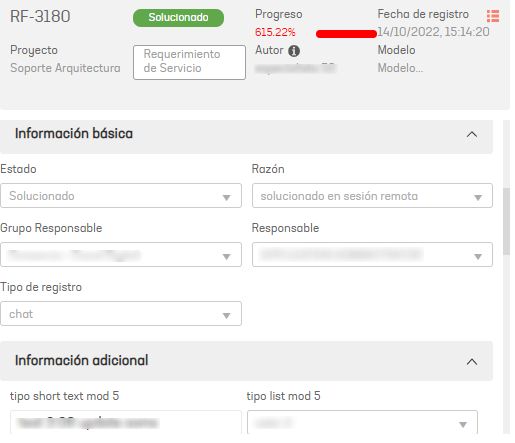
reference image in ASMS, in the image you can see the Responsible Group field
| properties | description |
|---|---|
| value | Record type identifier in Jira Server |
| Reference | Unique identifier to create a relationship between the concepts project > category, itemType, typeRegister, applicant, responsibleGroup, responsible, company, client see |
| Id | Responsible group ID in ASMS |
EXAMPLE: Relationship of the group responsible for Aranda / Jira Server
To create the list of states, follow the instructions below:
- Get the IDs of the groups responsible for Aranda.
- Get the IDs or value of the groups responsible for Jira Server, example.
- Assign the following status equivalence:
| Responsible group in Jira Server | Group responsible in Aranda | Id of the group responsible Aranda | Responsible group id Jira Server |
|---|---|---|---|
| Responsible Group 1 | Responsible Group 1 | 1 | id_item1 |
| Responsible Group 2 | Responsible Group 2 | 13 | id_item2 |
- Type the Id of the group responsible Aranda On Property “id” and the Responsible group id Jira Server of its equivalent taken from the Jira Server On Property value
{
  "responsibleGroup": [
    {
      "id": 1,
      "value": "id_item1"
    },
    {
      "id": 13,
      "value": "id_item2"
    }
  ]
}