


1. In the Inventory Device Detail View, select the Hardware where you can consult associated information of each of the physical components of the device.
2. Select the required hardware component (BIOS, Printers, Network Drives, Motherboard, CD-ROM, Monitors, Video Adapters, Keyboard, Mapped Drives, Network Resources, Memory, Disks, and Processors,) and you will be able to view the related information.
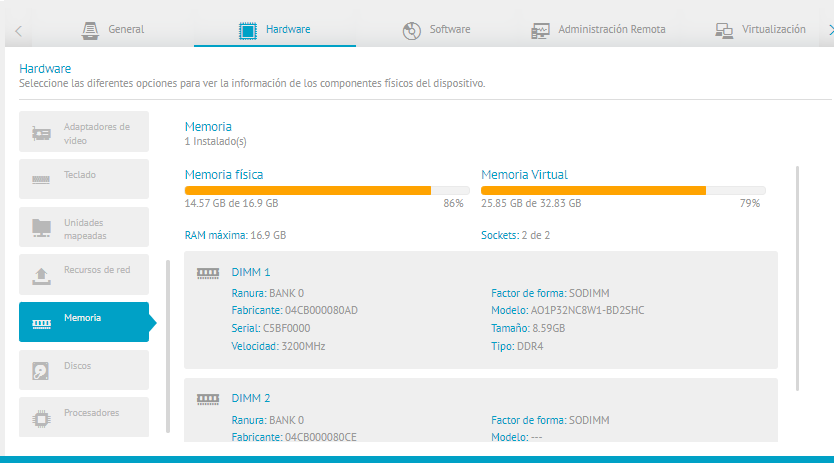
NOTE: Below are the hardware components that will be able to delete available shares such as Printers and Network Resources. Additionally, partitioning and disk encryption functionality is introduced.
Printers
1. When selecting the hardware component Printers, you will be able to view the list of printers installed on the device.
2. To delete the share, click the Eliminate  . The message is displayed You want to delete the printer and click the Accept.
It will display a green message indicating that the action will be notified to the device.
3. To verify that the action is complete, go to the device details, select the General and the Activities; you will be able to view the events RemoveSharedPrinter and Inventory Processed, confirming that the printer was removed and the HW/SW inventory was automatically generated.
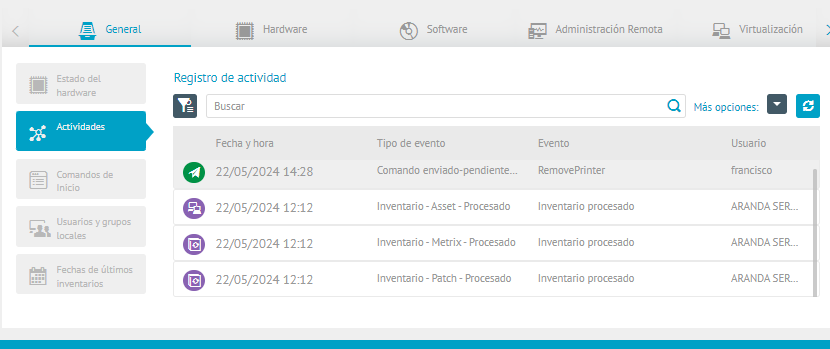
4. Go back to the device details, select the Hardware and the Printers and validate that the printer was deleted.
⚐ Note: This functionality is currently available for Windows and MAC.
Network Resources
1. When selecting the hardware component Network Resources You will be able to view the list of shared folders on the device.
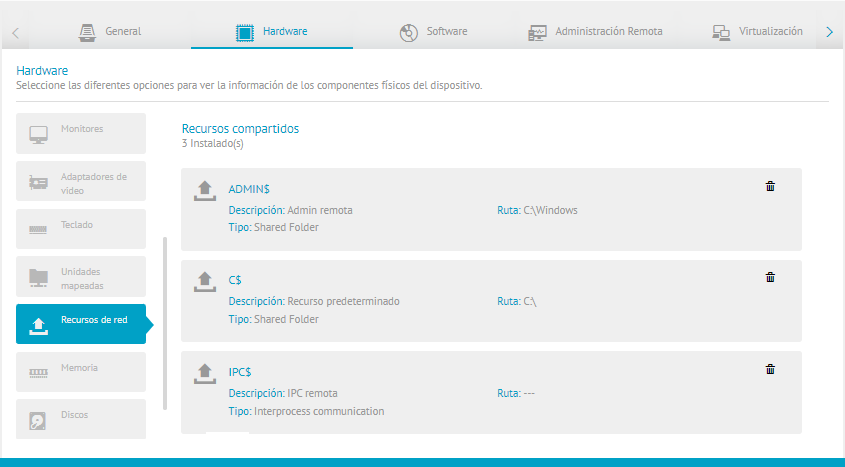
2. To delete the share, click the Eliminate . The message “You want to delete the share” is displayed, and click the Accept.
It will display a green message indicating that the action will be notified to the device.
3. To verify that the action is complete, go to the device details, select the General and the Activities. You will be able to view the events, “RemoveSharedResource” and “Inventory Processed”, confirming that the resource was removed and the HW/SW inventory was automatically generated.
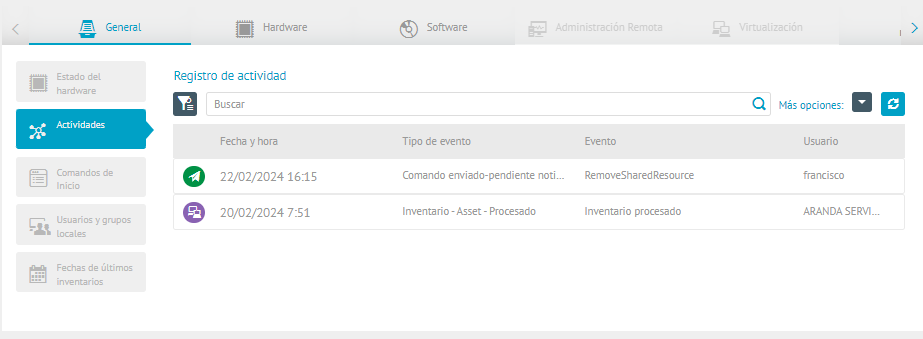
4. Go back to the device details, select the Hardware and the Network Units and validate that the network resource was deleted.
⚐ Note: This functionality is currently available for Windows and MAC.
Discs - Physical discs
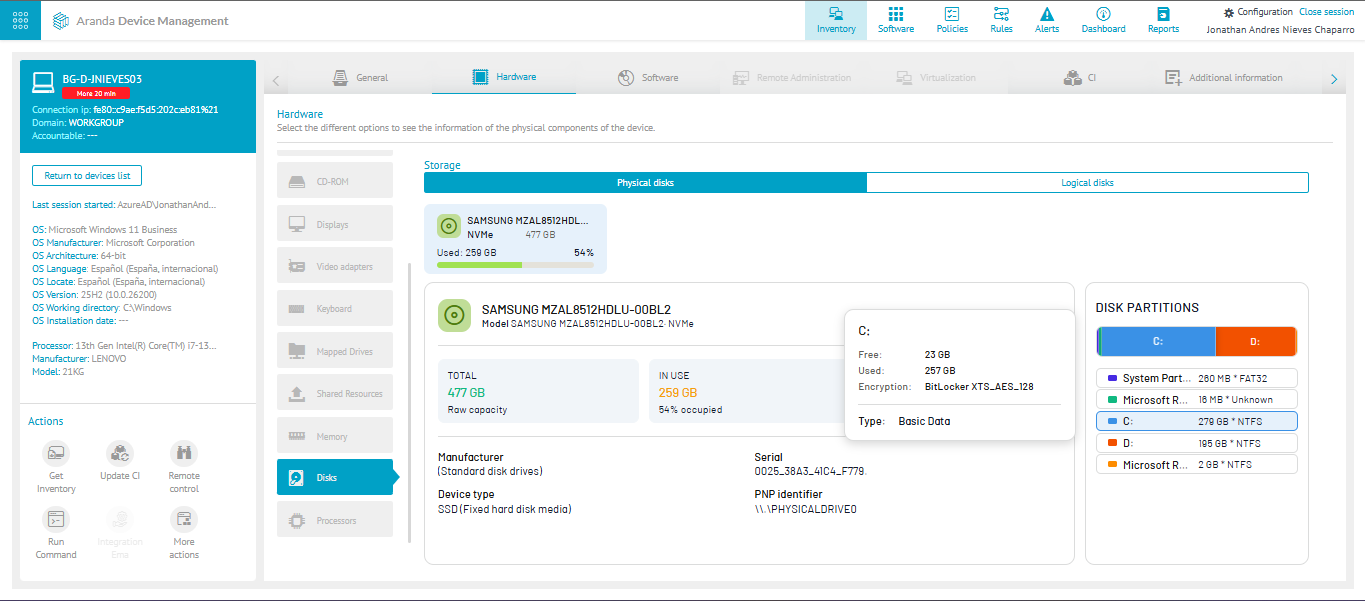
On the hardware component Discs a summary of each physical disk in the device is presented, with its name, type (HDD or SSD), total capacity, and percentage of use. When you select a disk, its details are displayed: total capacity, space in use, and free space, as well as the manufacturer, serial number, device type, and PNP identifier.
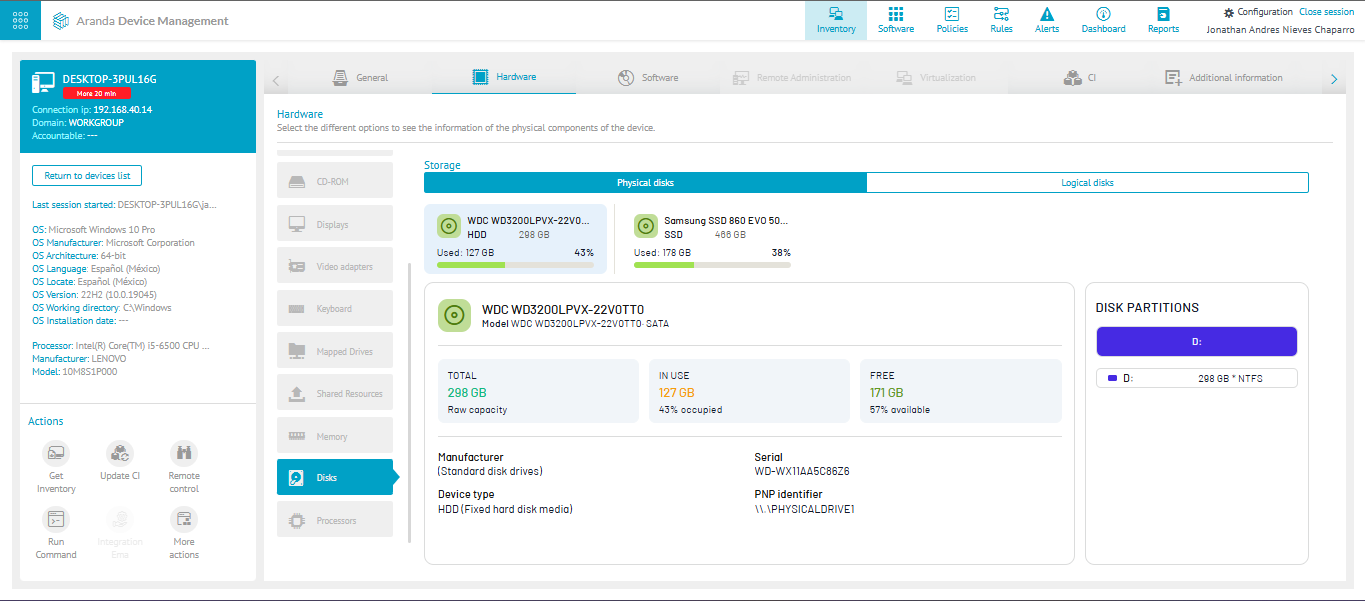
In the partitions section, all the partitions that the Operating System has, such as reserved, recovery and basic partitions, are displayed. If applicable, the type of encryption handled by the partition is also indicated.
Disks - Logical Disks
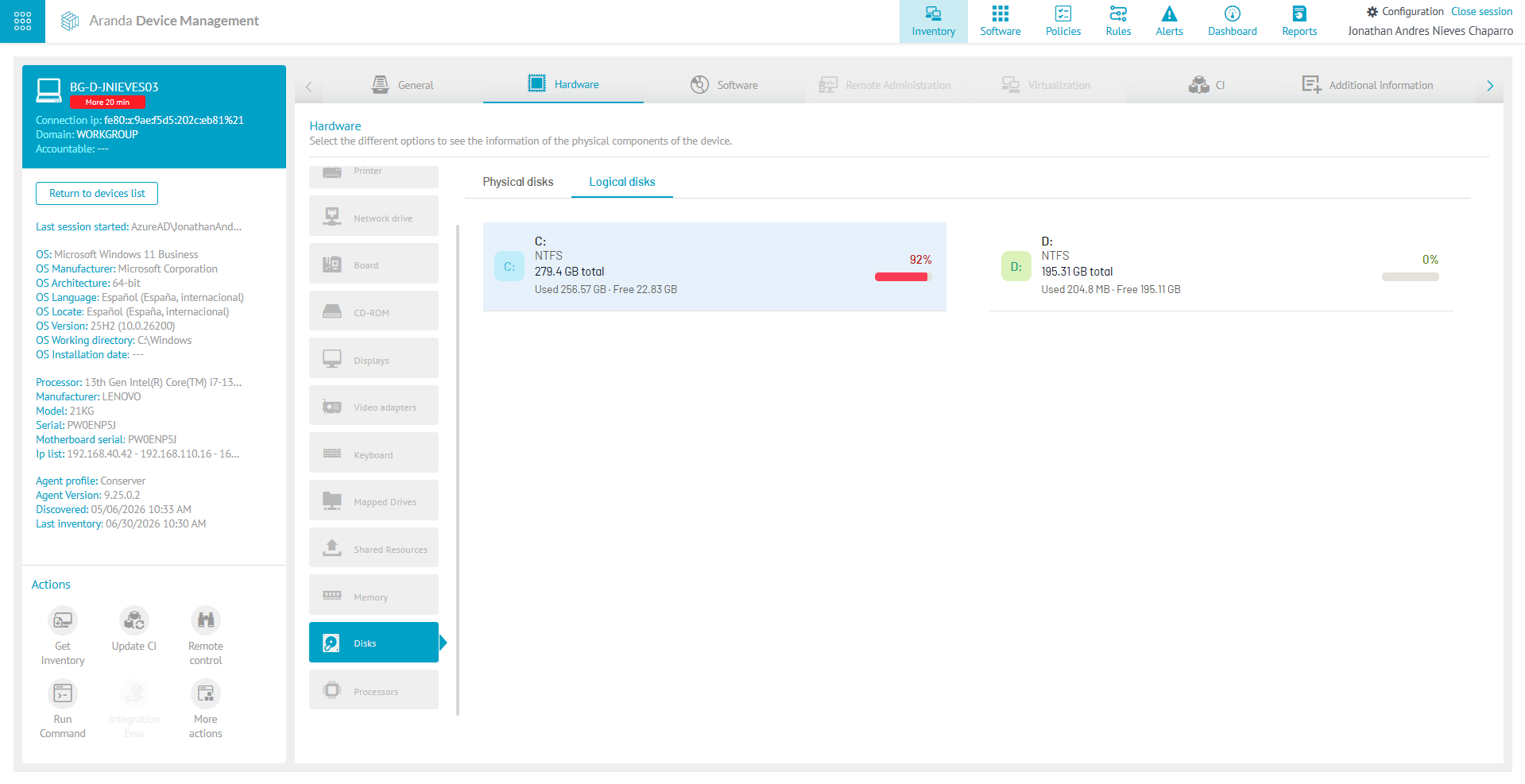
When you select the Logical disks, displays the volumes on the device (for example, C:, D:, and so on) grouped into a single list, regardless of the source physical disk. The active tab is highlighted to indicate the view in use.
For each volume, the drive letter, file system (e.g., NTFS), total capacity, space used, and free space are presented, expressed in GB or TB with decimals when applied (e.g., 90.5 GB). Each volume is identified by a distinctive color in its drive letter, and when you select it, it is highlighted.
The percentage of use of each volume is represented by a color according to its status: green for use of up to 75% (healthy state), orange for use between 75% and 90% (warning state), and red for use above 90% (critical state).
⚐ Note: On Unix operating systems, the drive icon displays the /, both for the root and for other volumes (for example, /boot/efi). On Windows systems, the icon shows the full drive letter (for example, C:, D:).
⚐ Note: In Unix operating systems, the capacity of the physical and logical disks is expressed in GiB, a unit of measurement that matches that reported by the operating system on the station.