


In this module, the categories that are associated with the services are configured according to the needs of the organization.
Category Display
1. There are two ways to display categories: the list view (Default) and the tree view.
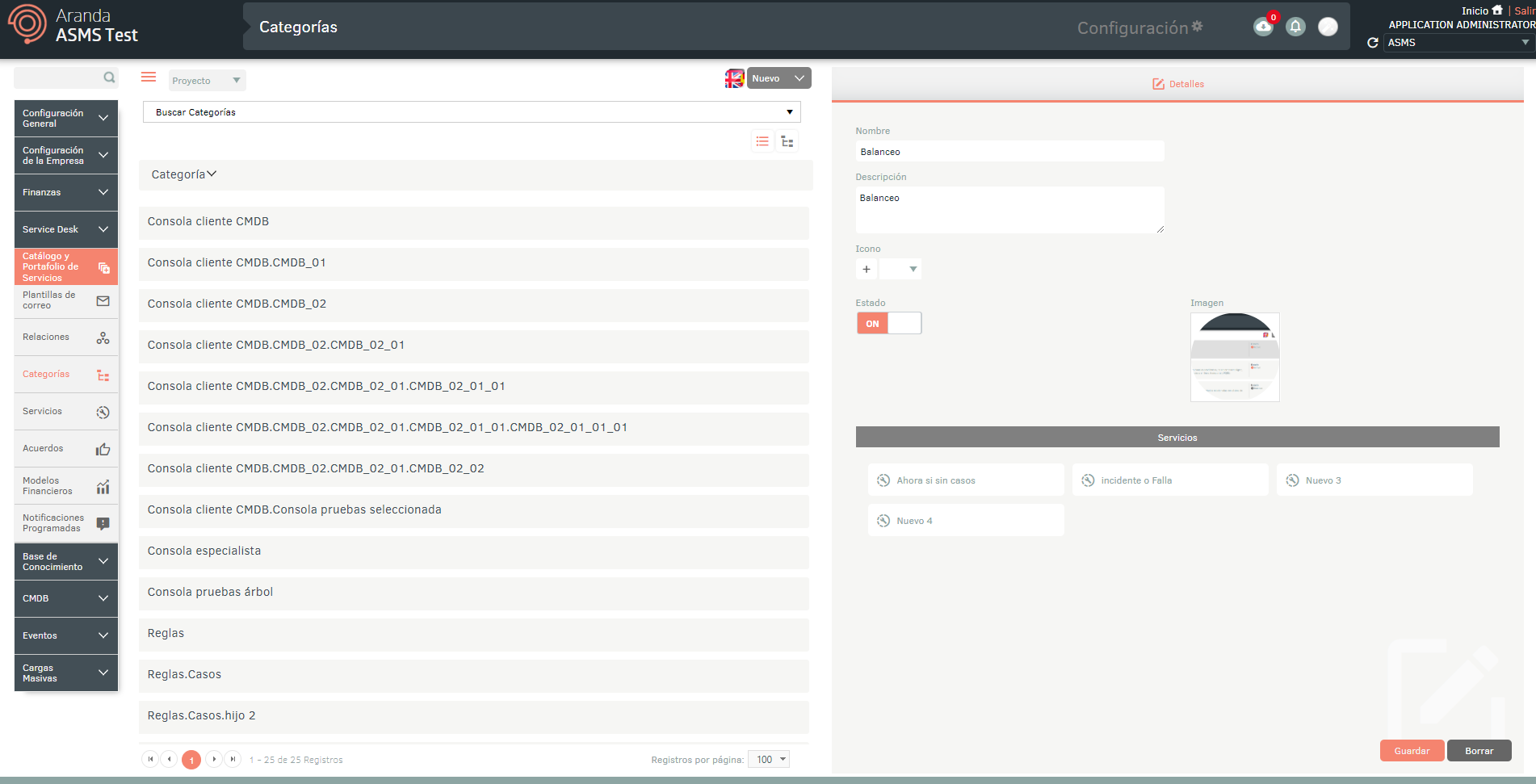
List View: This option is displayed by default. In this display mode, categories are arranged in alphabetical order according to hierarchy. In this view, it is also possible to search for categories.
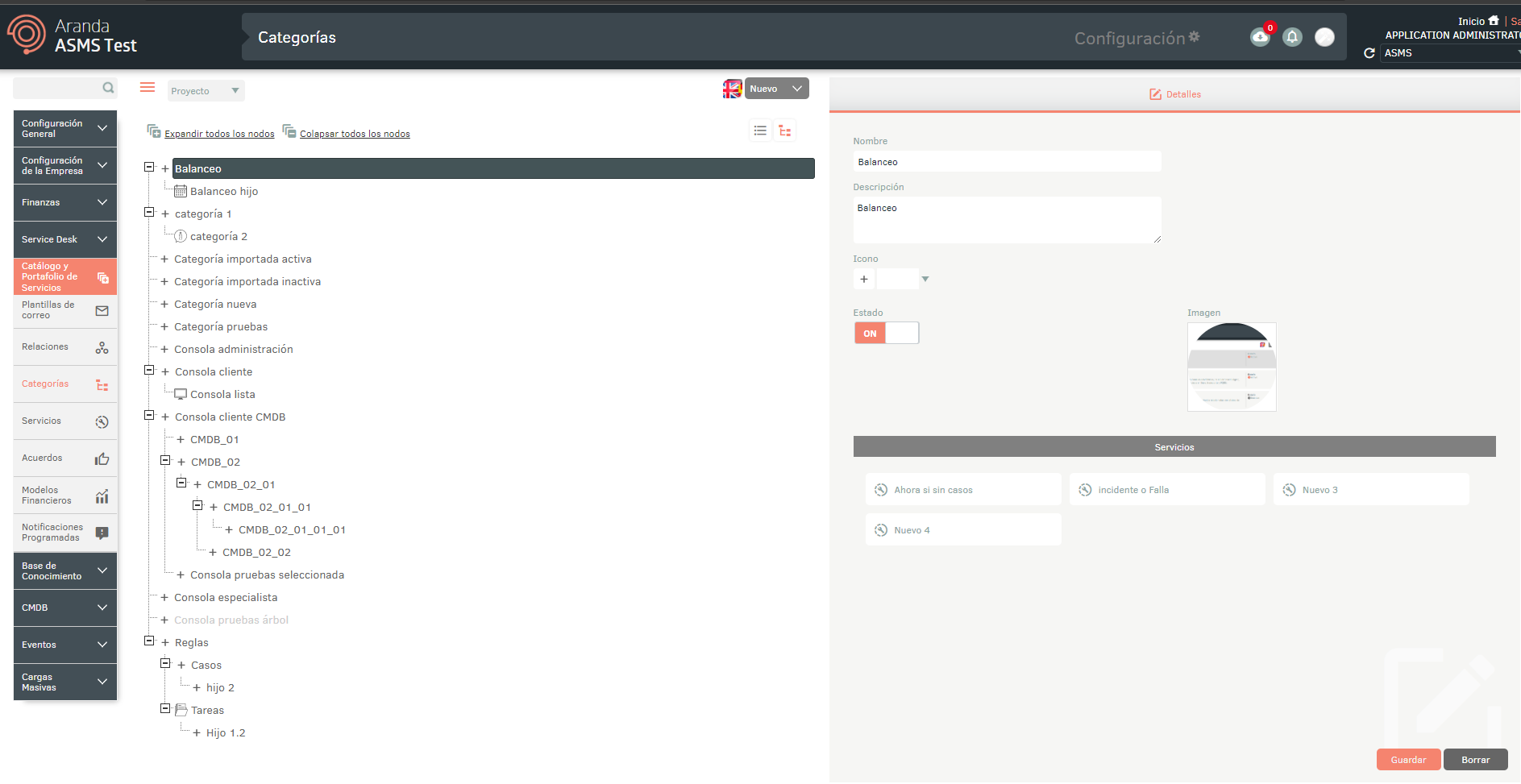
Tree View: In this display mode, the categories are organized in alphabetical order according to the root categories; In this view it is possible to expand or collapse all nodes.
Creating Categories
1. To create a category, log in to the ASMS Admin Console, in the Catalogue and portfolio of services from the main menu, select the Categories. In the information view, select the New/Root or New/Item and in the Detail view, configure the basic information for the category.
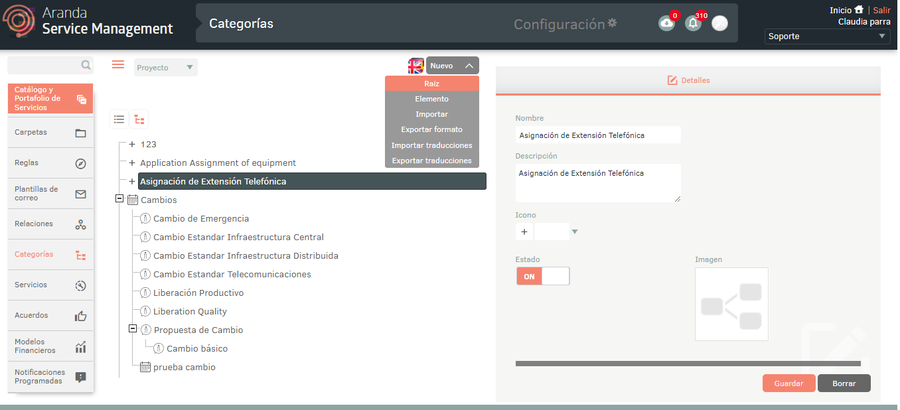
Root Category: This option organizes the category at the source position of the category tree.
Category Element: This option organizes the category into a subordinate position to the root category.
2. In the Category Detail view, in the ASMS Management Console, Select the Details, where you can fill in category information, such as name, description, icon, and image representing the selected category. The recommended dimensions for category images are 179px*179px.
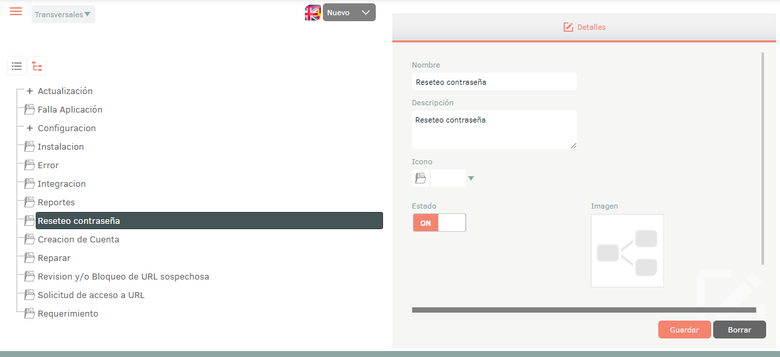
3. To edit a category, in the information view, select a record from the list of created categories (root or element), and in the detail view, you can modify the required information.
4. To delete a category in the information view, select a record from the list of categories created (root or element), and in the detail view, click the Erase to delete the associated information.
5. When you finish setting up the category, click Save in the Detail view of the ASMS Management Console to confirm the changes made.
Bulk Category Upload
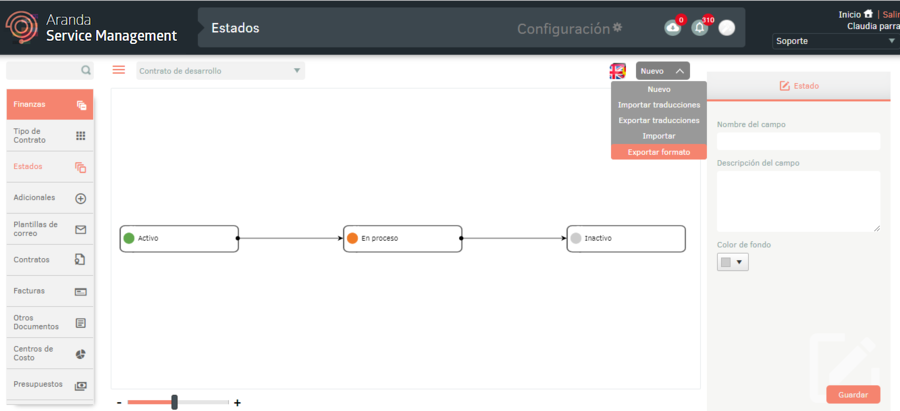
1. To export the category information, log in to the ASMS Admin Console, in the Catalog and Portfolio of Services from the main menu, select the Categories. Define a project, and in the information view, select the New/Export Format; This option will allow you to export the information with or without data for updating and/or bulk creating categories.
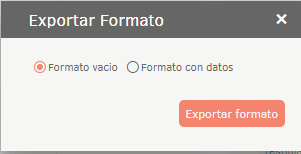
2. The window is enabled Export format where you must select whether you need to export the empty or data-filled format. Click Export Format.
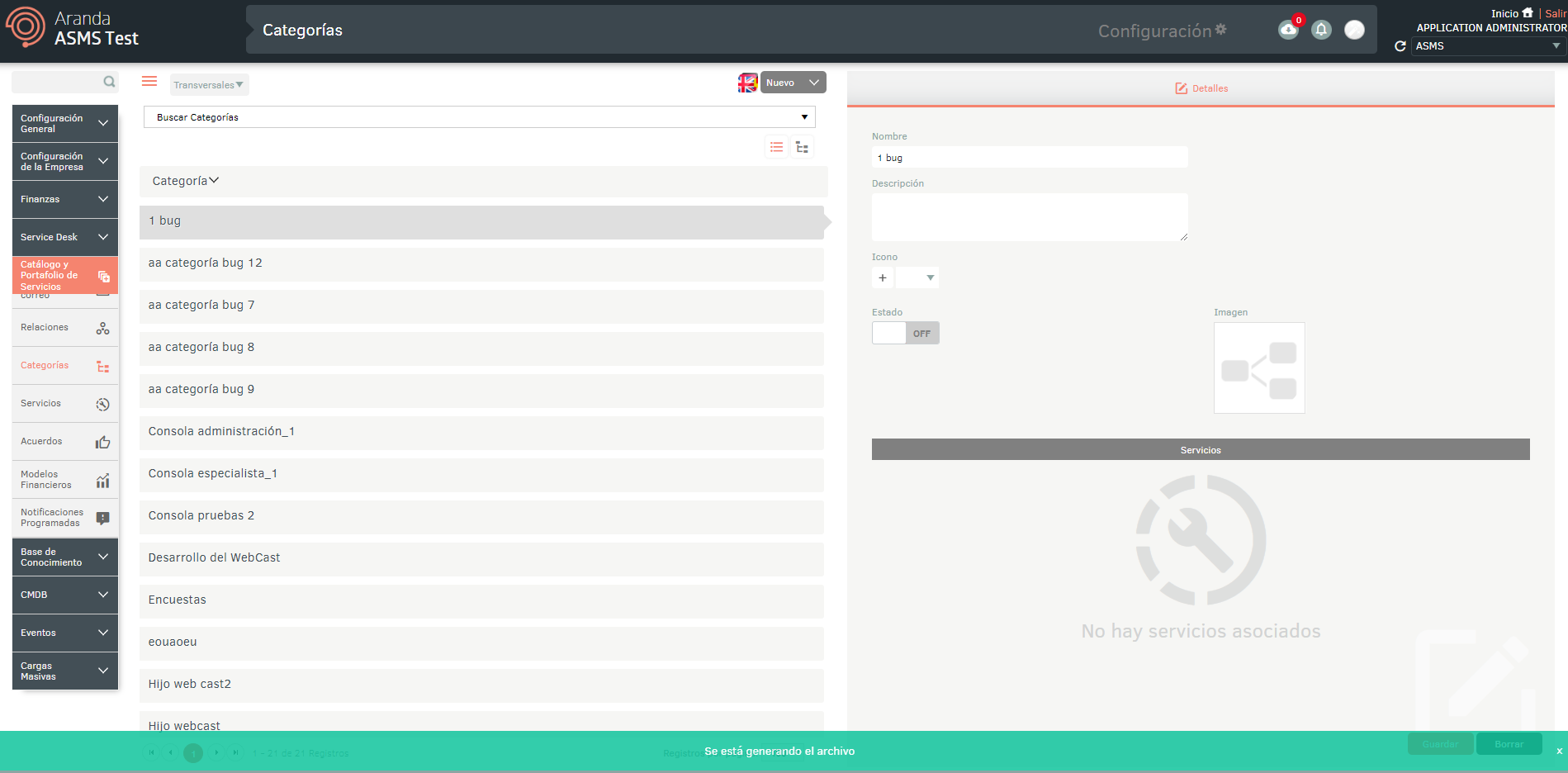
3. If you download the empty format, a zip file is automatically generated. If you downloaded the form with data, the file is scheduled for download, generating an informative message at the bottom of the screen. The zip file includes a folder for the category images and an Excel file with all the necessary fields for the creation and/or updating of categories.
4. From the Admin console header menu, select the Notifications option.
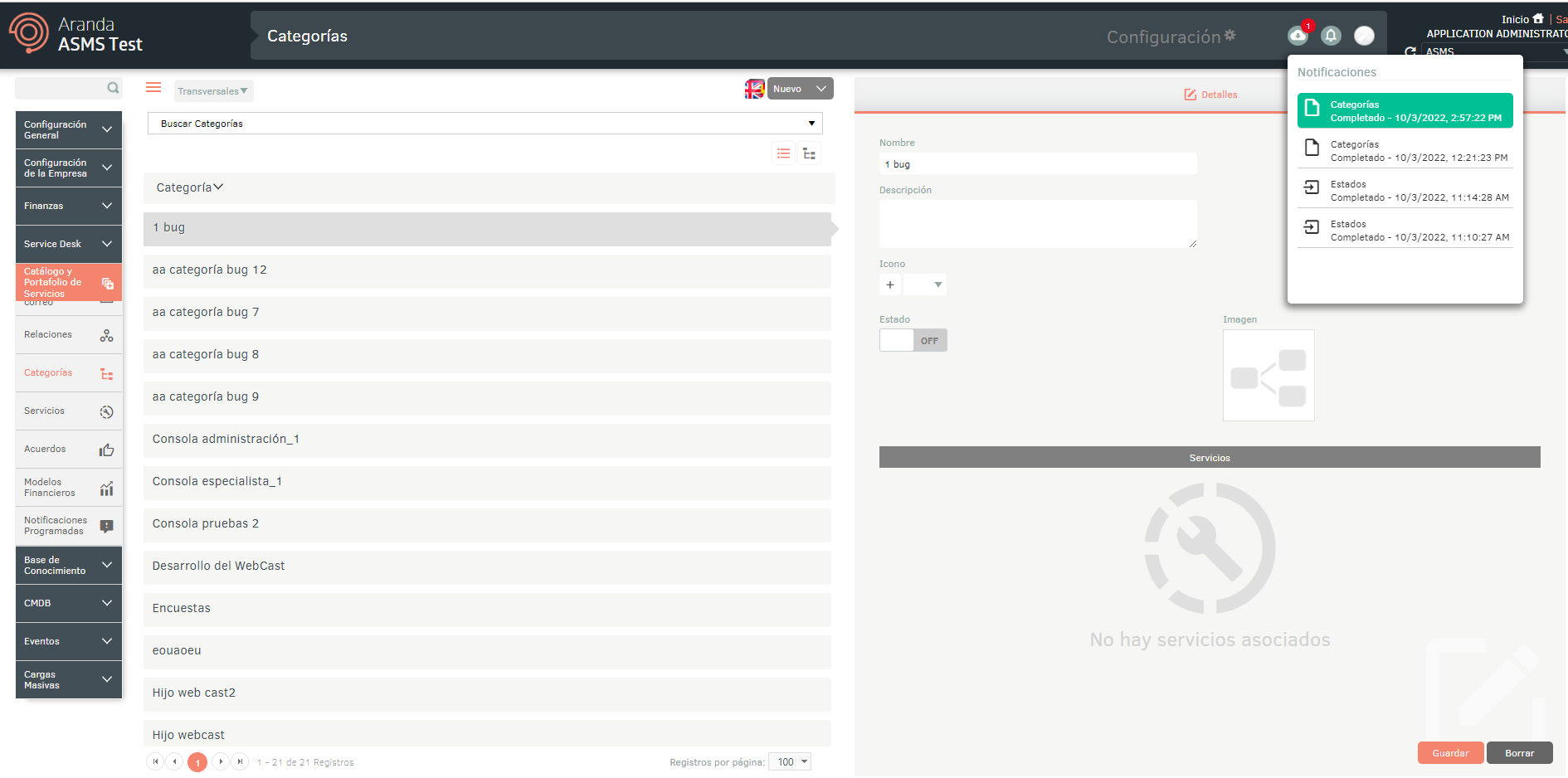
⚐ Note: In the Notifications option you will be able to view the generated format in Pending status (Orange color) and once the export process is finished, it will change to Completed status (Green color) with the download date.
5. Click on the notification to download the file.
The Excel file includes all the fields in the categories. You will also find the necessary fields for the creation and/or updating of the categories.
On the Info The mandatory nature and the information to be filled in on each field is described in detail, as well as the list of icons that must be configured.
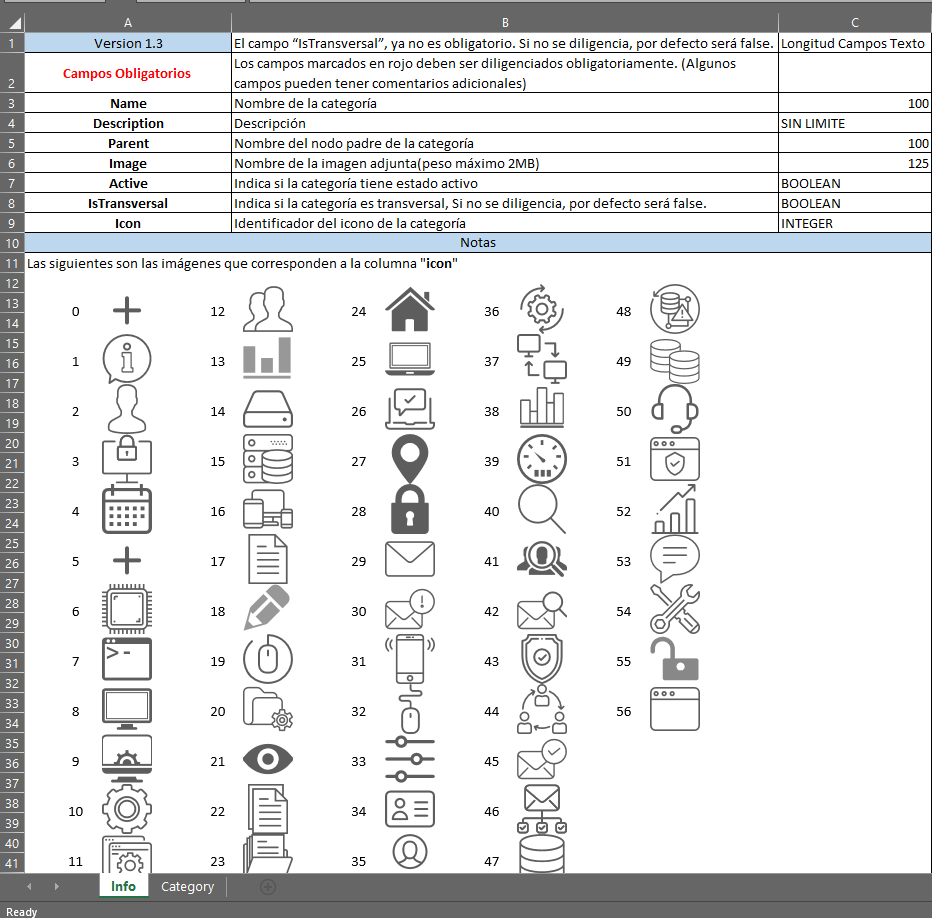
Import Format for Categories
1. Once the form has been completed, enter the ASMS administration console, in the section Catalog and Portfolio of Services from the main menu, select the Categories. Define a project, and in the information view, select the Import Format.
⚐ Note: When you edit the name of the downloaded category and upload the file, the system will create a new category with the new name entered. For category editing, it is possible to edit the IsTransversal option; When you move a category from transversal to project or vice versa, only the category will change and not its daughters or parents categories. The categories that are modified in the IsTransversal field or those that are children of the category will be displayed in the list view.
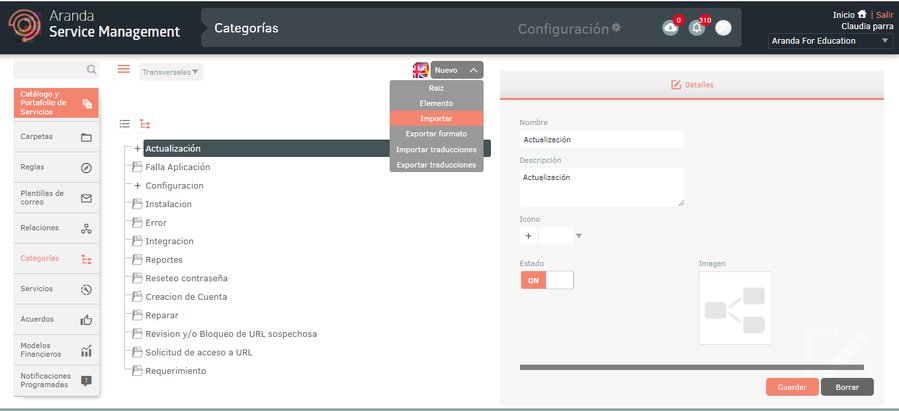
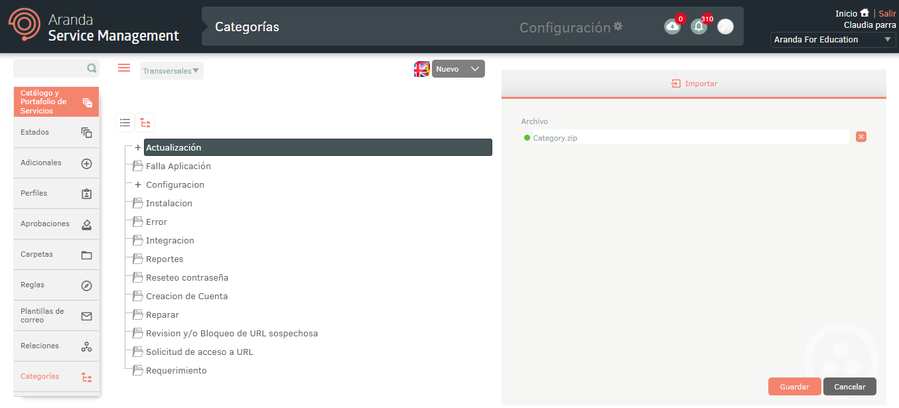
2. In the window Import, upload the file, and click the Save.
3. By clicking the Save To start importing or updating categories, the file will be scheduled for import, displaying a message at the bottom of the screen and being added to the notification panel.
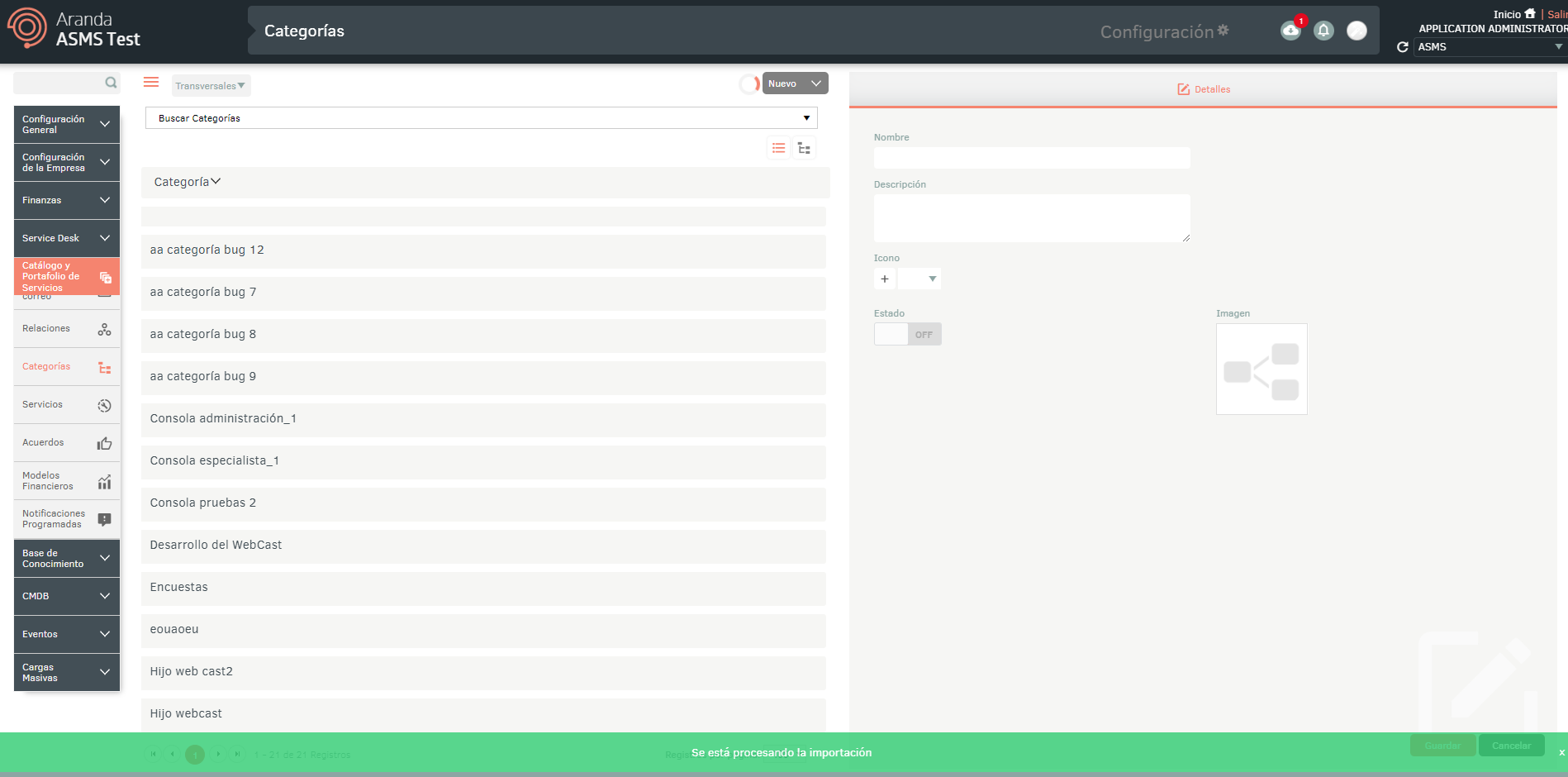
4. When the import is complete, the corresponding notification will change from orange to green, indicating that it has been completed.
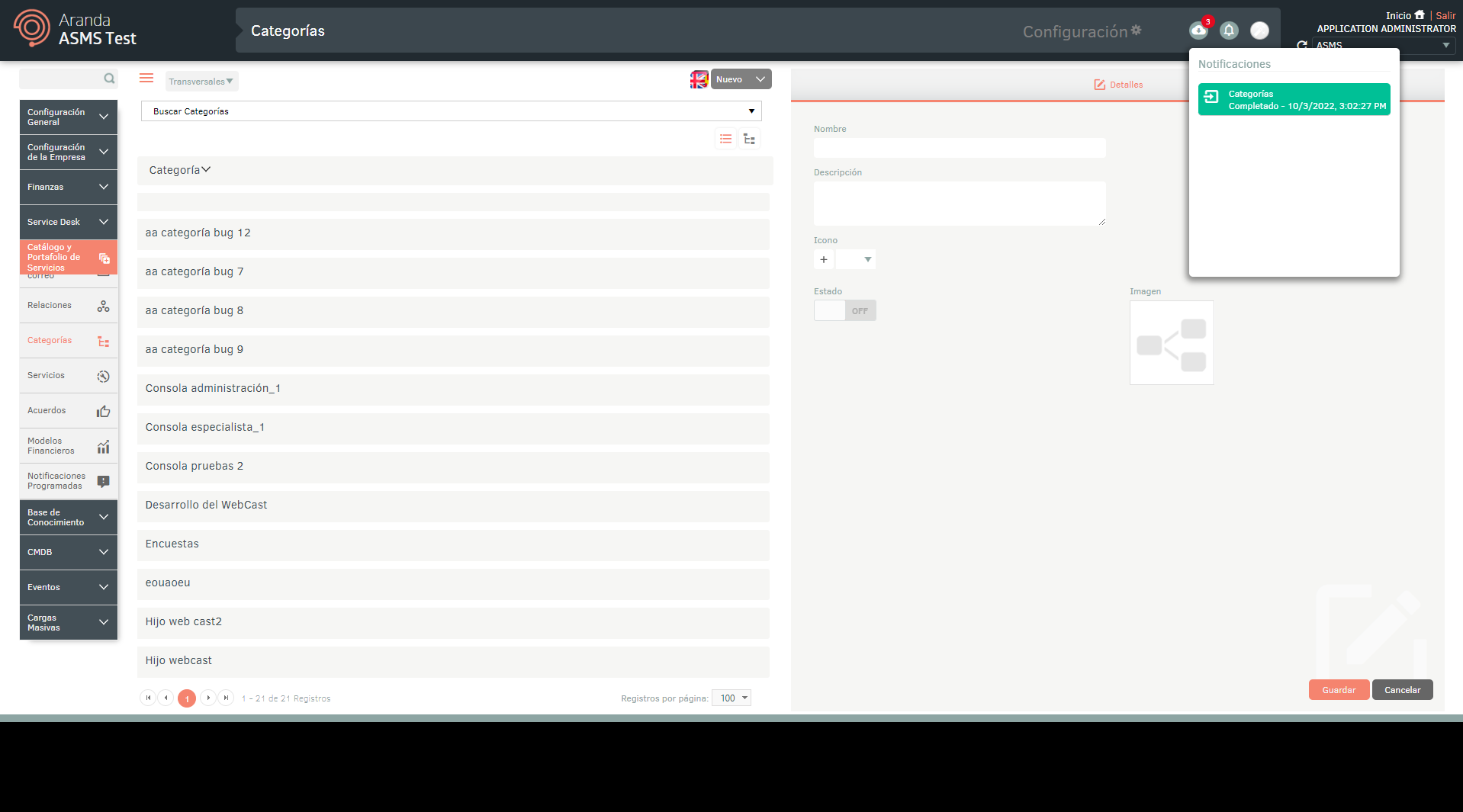
5. When you click on the notification, a window will be displayed where you can view the details of the import.
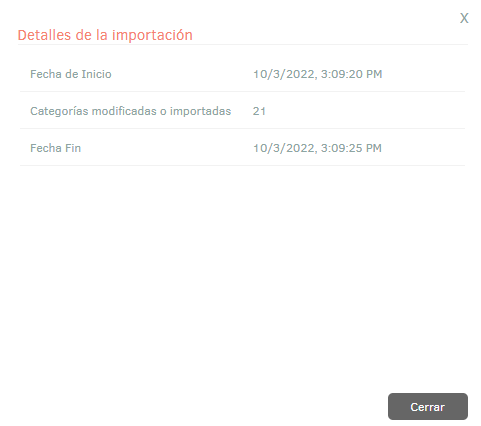
6. If during the import the file generated errors in one or more of its records, when viewing the import details it will be possible to download a file with the detail of the records that generated errors.
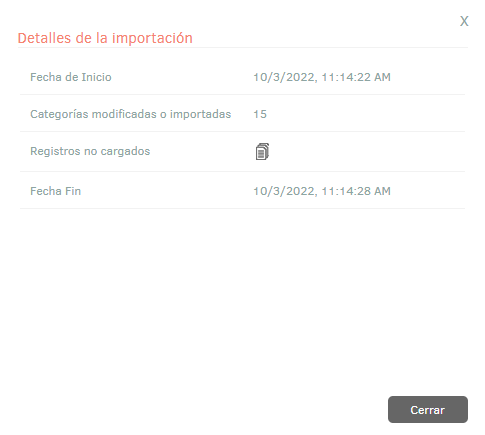
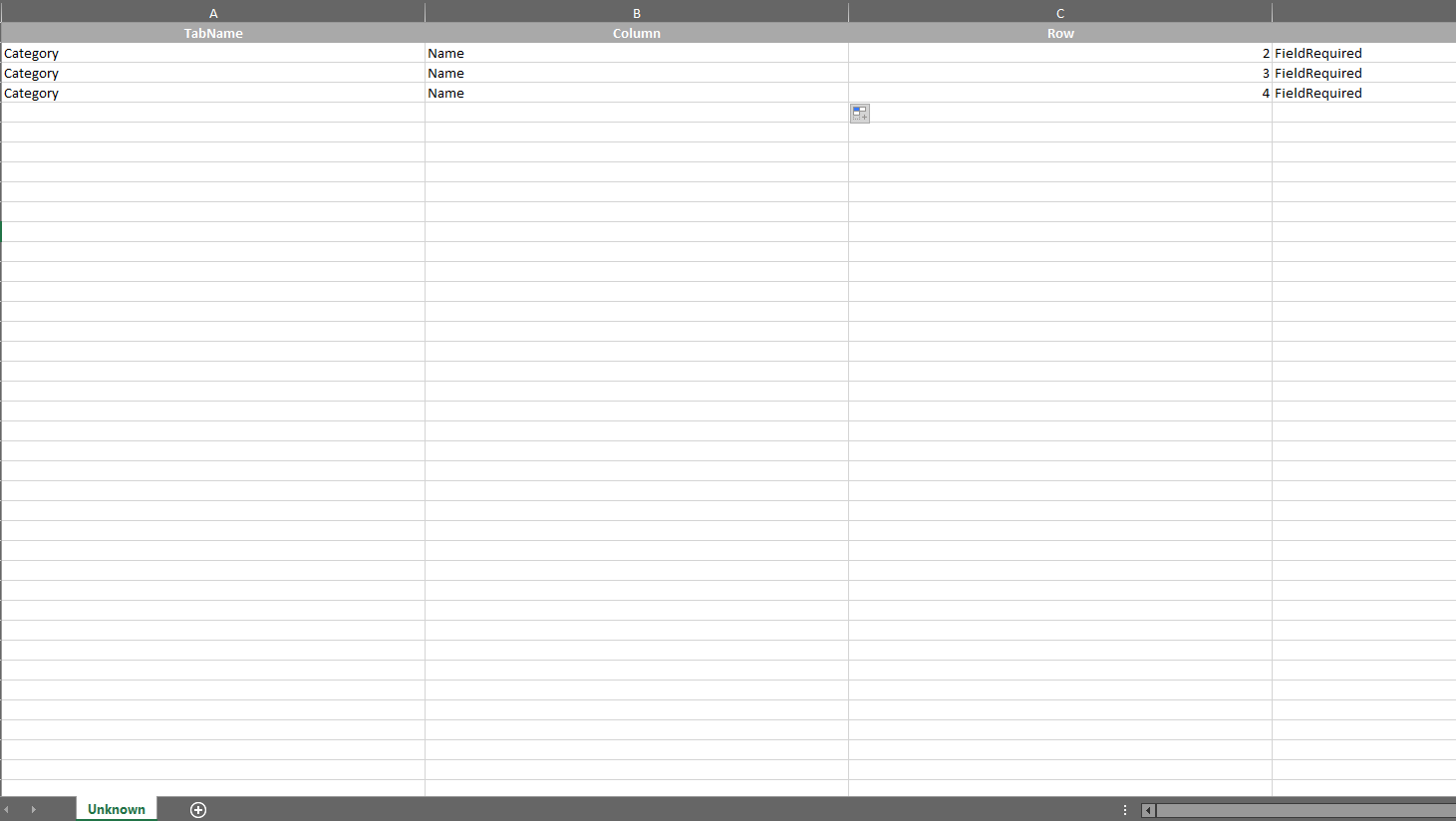
7. In the import details window, by selecting the unloaded records icon, you will be able to download an Excel file with the details of the errors generated during the import.
Multilanguage
To configure the multilanguage option in catalog and service portfolio categories, you must take into account the documentation corresponding to the translations. View Multilanguage.